
Hazrat Shahjalal International Airport (IATA code DAC) is Bangladesh's largest and busiest airport, located in Kurmitola, Dhaka. It currently operates two international terminals (Terminal 1 and Terminal 2) and one domestic terminal. Terminal 3 is over 99 percent complete but is not yet open to passengers as of May 2026. This guide covers everything you need to know about getting to and from the airport, immigration for tourists and NRBs, baggage and customs rules, lounge access, on-arrival visas, and how professional Meet and Assist services make the entire experience much easier.
Welcome to Hazrat Shahjalal International Airport: An Overview
Hazrat Shahjalal International Airport is Bangladesh's main international airport. It is the busiest airport in the country and the primary gateway for millions of travelers every year, including tourists, Non-Resident Bangladeshis (NRBs), business travelers, and Hajj pilgrims.
If you are flying into or out of Dhaka for the first time, this airport can feel overwhelming. There are long lines, large crowds, and many different counters to guide. But once you understand how it is laid out and what to expect, the experience becomes much more manageable.
Essential Information: IATA Code, Location, and Contact
The IATA code for Hazrat Shahjalal International Airport is DAC. The airport is located in Kurmitola, approximately 17 kilometers north of Dhaka city center, and is operated by the Civil Aviation Authority of Bangladesh (CAAB).
|
|
|
|
|
|
|
|
|
|
|
|
|
|
|
|
|
|
|
|
|
|
|
|
|
|
|
|
|
|
Understanding the Terminals: Terminal 1, Terminal 2, and the New Terminal 3
HSIA currently has two active international terminals (Terminal 1 and Terminal 2), one domestic terminal, and a VVIP terminal. Terminal 3 is structurally complete but has not yet opened to passengers.
Terminals 1 and 2 are in the same building and handle all international arrivals and departures. When you land, you go through immigration and customs on the ground floor. When departing, you check in on the second floor. The domestic terminal sits to the left of the international building and is a single-floor structure where arrivals and departures share the same level.
Terminal 3 is the most talked-about development at Dhaka airport right now. Built at a cost of over BDT 21,000 crore with Japanese financing from JICA, it covers 542,000 square meters and includes 26 boarding bridges, 115 check-in counters, 128 immigration counters, and 16 baggage belts. Once open, it is expected to handle up to 20 million additional passengers annually.
However, as of May 2026, the terminal remains non-operational. Negotiations between CAAB and the Japanese consortium managing its operations entered a decisive phase in April 2026, with revised pricing submitted and high-level meetings continuing.
The State Minister for Civil Aviation indicated in March 2026 that it may take another six to nine months before passengers can use the terminal.
Until an agreement is finalized and staff are recruited and trained, all flights continue to use the existing two international terminals.
Source: Wikipedia HSIA Article | BSS News April 2026
Navigating Transportation: How to Get to and From HSIA
Getting to and from Hazrat Shahjalal International Airport is possible through public buses, CNG auto-rickshaws, ride-hailing apps like Uber, and private car services. The best option for you depends on your budget, how much luggage you have, and how much time you have before your flight.
Public Transport: Buses and Rail Links
Dhaka currently has no rail or metro link directly to the airport. Public buses run along the Dhaka-Mymensingh highway that passes the airport, but they are slow, crowded, and not suitable if you have large bags.
The BRTC (Bangladesh Road Transport Corporation) operates some routes that stop near the airport access road. However, the walking distance from the main bus stops to the terminal can be significant, especially with luggage.
Most experienced travelers avoid public buses for airport journeys and instead use CNG auto-rickshaws or app-based rides.
Ride-Sharing and Taxis: Uber, CNG, and Private Rentals
Uber is the most popular app-based ride option at Dhaka airport. CNG auto-rickshaws are cheaper but have limited luggage space. Pre-booked private car services are the most reliable choice for families and corporate travelers.
- Uber is available at DAC, and you can book a ride directly from inside the airport before you exit. Fares vary by traffic and vehicle type, but a standard ride to central Dhaka typically costs BDT 300-600.
- CNG autorickshaws wait outside the arrival area and charge BDT 200 to BDT 400 for central Dhaka routes, though they fit only two to three people comfortably and cannot handle large bags.
- Pre-booked airport transfer services with dedicated sedans, Noah vans, or Hiace vehicles are ideal for groups and families. These services pick you up right from the terminal gate and drop you at your exact destination.
Global Airport Assisting Services (GLAAS) offers airport pickup and drop-off through its AeroBEE fleet.
Vehicles are tracked and include sedans for one to three passengers, Noah vans for four to six, and Hiace vehicles for up to ten passengers. You can book in advance by visiting their website.
Pro Tip: Avoiding Traffic Jams in the Airport Road Area
The road to and from HSIA, particularly the Uttara and Banani sections, can become severely congested at peak hours. Traveling between 8 AM and 10 AM, and between 5 PM and 9 PM, significantly increases your travel time.
If your flight is early morning, plan to leave home by 3 AM or 4 AM to avoid traffic entirely. For evening flights, check Google Maps real-time traffic before leaving. If you are arriving at night, traffic is minimal, and most rides take 25 to 35 minutes to central Dhaka.
A Meet and Assist service can also coordinate your pickup timing based on your actual landing time, which removes the guesswork entirely.
The Arrival Experience: From Landing to Leaving the Airport
After landing at Hazrat Shahjalal International Airport, passengers go through immigration, collect their bags at baggage claim, and then pass through customs before exiting. The entire process can take 30 minutes to over 90 minutes, depending on flight congestion and queue length.
Immigration Procedures for Tourists and NRBs
Bangladeshi passport holders go to the national counter at immigration, while foreign passport holders proceed to the foreign nationals counter. NRBs holding foreign passports should approach the foreign counter and present their passport along with any relevant visa or No Visa Required seal.
After your flight lands, you exit through a boarding bridge or, if your aircraft parks at a remote bay, through Gate 21 on the ground floor. Follow the signs to the arrivals immigration hall.
Bangladeshi citizens go straight to the national counters. If you are a foreign national of Bangladeshi origin holding a foreign passport, check in advance whether you have a No Visa Required seal, which allows you to skip the visa desk and proceed directly to immigration.
The immigration officer will stamp your passport with an entry permit. Keep your completed disembarkation card ready.After immigration is cleared, follow the display boards to your assigned baggage belt.
Baggage Claim and Customs Clearance Tips
Baggage belts at HSIA are assigned by flight and displayed on the overhead screens. After collecting your bags, you exit through either the Green Channel (nothing to declare) or the Red Channel (goods to declare). Bags are scanned even in the Green Channel.
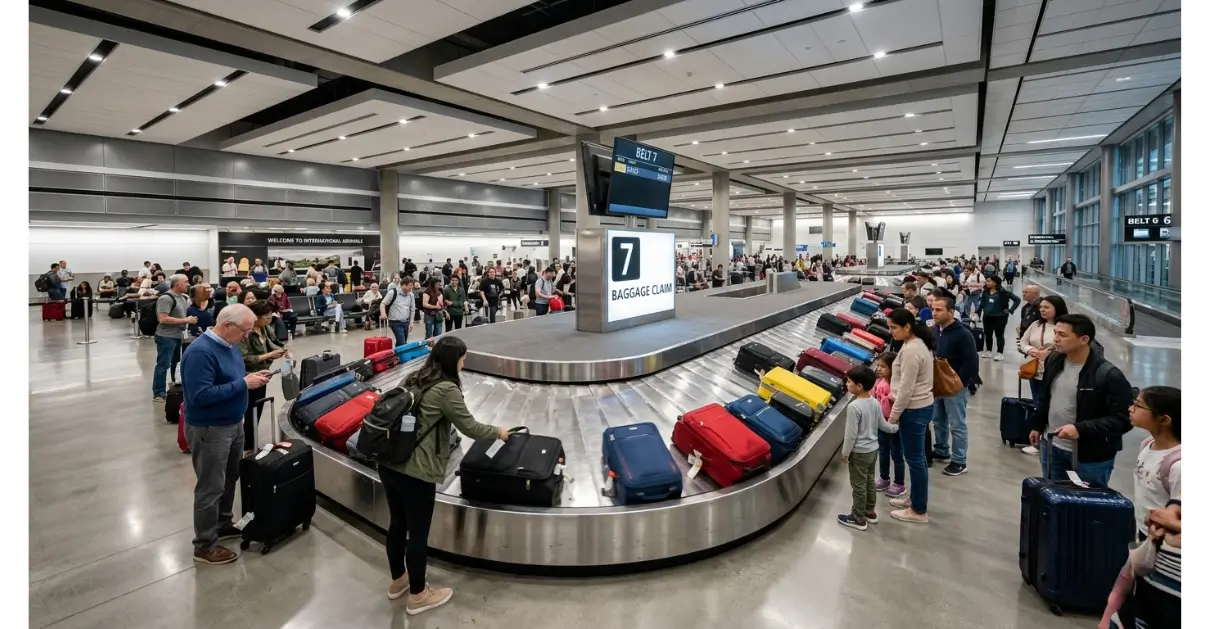
- Check the overhead display board right after immigration to find your belt number.
- Keep your baggage claim stubs. Airport staff check them before you exit.
- If your bag does not arrive, go directly to your airline's lost luggage counter before leaving the customs hall.
- All bags are scanned regardless of which channel you use.
- If you are carrying items within the duty-free limit, you can walk through the Green Channel without stopping.
Currency Exchange and Local SIM Card Kiosks
Currency exchange counters are available inside the arrivals area before you exit customs, as well as in the departure zone. SIM card kiosks from operators like Grameenphone, Robi, and Banglalink are available just outside the arrivals exit.
Exchange rates inside the airport are generally slightly less favorable than in the city, but the difference is small.
If you need cash immediately for a taxi, it is perfectly fine to exchange a small amount at the airport and get a better rate later in the city.
For Visa on Arrival passengers, there is a Sonali Bank counter inside the immigration area where you can also exchange currency at standard rates.
The Departure Journey: Starting Your Flight Right
For departing passengers at HSIA, you enter the terminal from the ground floor and access the departure concourse on the second floor. Here, you complete airline check-in, proceed through security, and clear departure immigration before reaching the boarding gates.
Check-in Counters and Security Protocols
Airline check-in counters at HSIA are located on the second floor of the international terminal. Passengers must pass through security screening before accessing the departure lounge. Laptops and liquids in containers larger than 100ml must be removed at the security checkpoint.
Arrive at your airline's check-in counter with your passport, confirmed e-ticket, and any required visas. After check-in, you receive your boarding pass and proceed to the security checkpoint.
Remove laptops from bags and place metal items in the tray. After security, proceed to immigration departure, where an officer stamps your exit.
After clearing immigration, you reach the departure lounge where boarding gates and lounges are located.
How Early Should You Arrive at Dhaka Airport?
For international departures from HSIA, we recommend arriving at least 3 hours before your scheduled flight time. For domestic flights, 1.5 to 2 hours is sufficient.
|
|
|
|
|
|
|
|
|
|
|
|
|
|
|
|
|
|
|
|
Common Mistakes to Avoid During Boarding
Many delays at Dhaka airport happen because passengers are not at the gate on time, carry prohibited items, or miss their boarding call while in a lounge or shop.
- Do not carry liquids over 100ml in your hand luggage. They will be confiscated at security.
- Check your gate number before entering the departure lounge. Gates can change without announcements reaching all areas.
- Keep your boarding pass and passport accessible at all times in the departure area.
- Do not assume announcements will reach you in a lounge or restaurant. Set an alarm for boarding time.
- If traveling with checked luggage, please submit any unaccompanied baggage to your airline at least 3 hours before departure, as required by CAAB rules.
Airport Facilities: Making Your Wait Comfortable
HSIA offers executive lounges, cafes, restaurants, duty-free shops, prayer rooms, and currency exchange counters across both terminals. The facilities are not as extensive as major regional hubs, but they cover all essential needs for most travelers.
Executive Lounges and Relaxing Areas
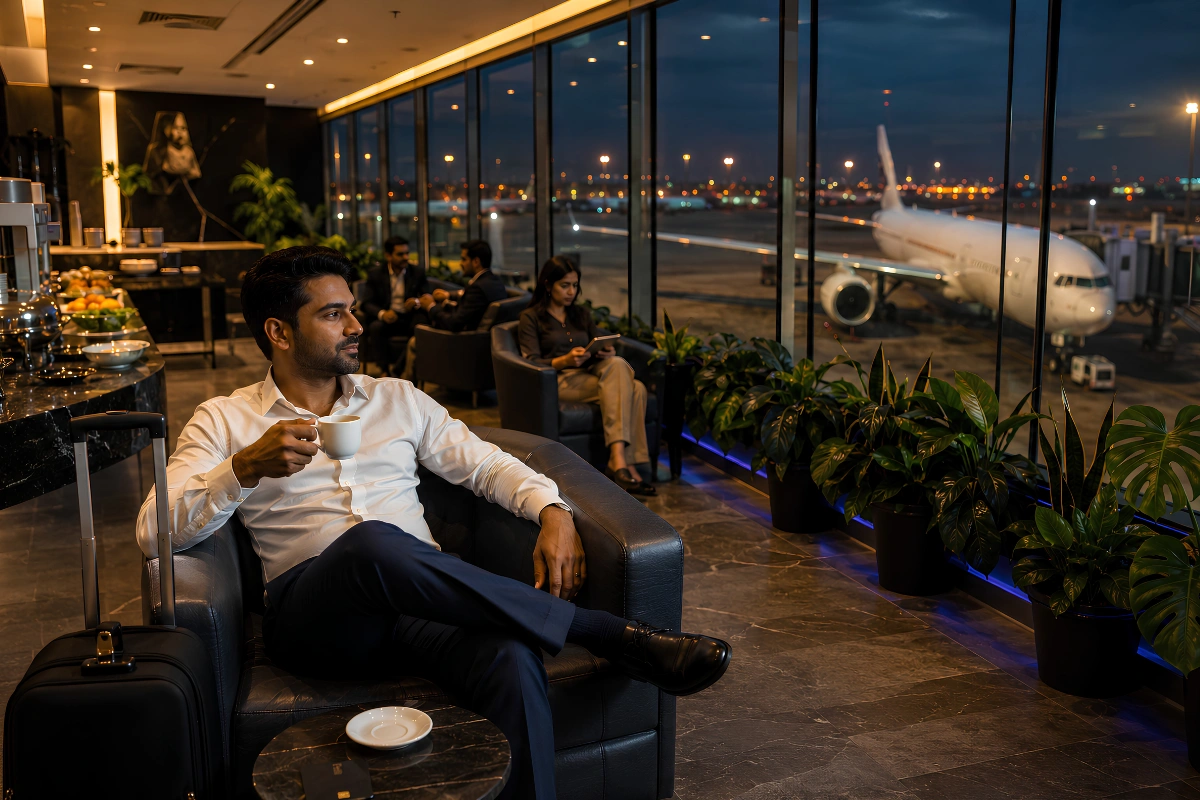
Several lounges operate at HSIA in the international departure zone. Access depends on your airline class, credit card, or a separately purchased lounge ticket. Priority Pass members can also access select lounges.
The two most well-known lounges at HSIA are the EBL Skylounge and the City Bank American Express Lounge.
The EBL Skylounge is located in the international departure area and operates 24 hours a day. It spans 6,272 square feet and seats over 140 guests.
The menu is curated by the Westin Dhaka, a five-star Marriott property. Eastern Bank primary and supplementary cardholders get complimentary access, along with up to two children under 12.
Business class passengers of Kuwait Airways, Malaysia Airlines, Singapore Airlines, and Turkish Airlines can also access the lounge with a valid boarding pass. Priority Pass members are accepted. You can find full details at
The City Bank American Express Lounge is available for Amex Platinum and Gold cardmembers.
A domestic terminal lounge is also operated by City Bank for domestic departures. Both offer Wi-Fi, food, beverages, and comfortable seating.
Global Airport Assisting Services also provides lounge access as part of its premium Meet and Assist packages.
It means even if you do not hold a qualifying credit card, you can still enjoy a quiet, comfortable space before your flight.
Dining Options: Cafes and Restaurants Inside DAC
Food and beverage options inside HSIA include a small selection of cafes, fast-food outlets, and airport restaurants in both the departure lounge and the arrivals area. Options are limited compared to larger international airports, so many travelers eat before arriving.
The departures area has coffee kiosks and small cafes near the gates. The arrivals area has a few snack options just outside the customs exit.
If you have access to a lounge, the food there is significantly better than the general concession options. If you have a long wait, please use lounge access or eat before you arrive at the airport rather than relying on terminal food stalls.
Duty-Free Shopping and Souvenir Stalls
Duty-free shops at HSIA are located in the international departure zone after security and immigration. You can purchase perfumes, cosmetics, chocolates, electronics, and alcohol. Souvenir stalls with Bangladeshi handicrafts and gifts are also available in the arrivals area.
Duty-free purchases are only for departing international passengers. You need your boarding pass to shop.
The selection is modest but covers most categories travelers expect. Prices are generally comparable to international duty-free standards.
If you are looking for locally made gifts, check the small handicraft stalls near the arrivals exit for items like Nakshi Kantha, jute products, and traditional Bangladeshi accessories.
Essential Rules for NRBs and First-Time Travelers
If you are an NRB returning to Bangladesh or a first-time international traveler, there are specific customs rules, baggage limits, and document requirements you need to know before you land. Not knowing these rules can lead to delays or unexpected duties at the customs checkpoint.
Bangladesh Customs Allowance and Gold Rules 2026
Under the Non-Tourist Passenger Baggage Rules 2025 (amended July 2025), a returning passenger can bring up to 100 grams of gold ornaments duty-free once per calendar year. Silver ornaments up to 200 grams are also duty-free. Beyond these limits, a fixed duty applies.
The National Board of Revenue updated its baggage rules through an official amendment in July 2025 (SRO No. 312-Law/2025/102/Customs). Here are the key points every incoming passenger should know.
|
|
|
|
|
|
|
|
|
|
|
|
|
|
|
|
|
|
|
|
|
|
|
|
|
|
|
|
Source: NBR Baggage Rules Amendment SRO 2025 (BSS) | Prothom Alo Gold Rules Explainer
If the total value of what you bring falls within the duty-free limit, you may exit through the Green Channel without filling out a declaration form.
If you carry items above the limit or dutiable goods, you must go through the Red Channel and submit a Baggage Declaration Form. You can download this form in advance from the Bangladesh Customs website.
Power of Attorney and Official Document Support
Many NRBs need Power of Attorney documents notarized or attested to manage property, banking, or legal matters in Bangladesh. This process often starts before departure and may require attestation from the Bangladesh mission in your country of residence.
If you are traveling to Bangladesh to handle legal or property matters, bring all relevant documents in original and photocopied form.
Immigration officers do not handle these documents, but customs staff may ask questions if you are carrying original documents or financial papers.
For in-depth assistance with document handling at the airport, GLAAS agents are experienced with NRB travel requirements and can guide you through any additional protocols upon arrival.
Why You Should Consider Professional Airport Assistance
Airport assistance services at HSIA are not just for VIPs. They are designed for anyone who wants a faster, less stressful experience, including elderly travelers, families with young children, medical patients, first-time international travelers, and frequent business flyers.
The Benefits of Meet and Assist Services for Seniors and Families
A Meet and Assist service places a trained airport agent with you from the moment you land or arrive at the terminal. The agent handles queues, baggage, checkpoints, and coordination so you do not have to figure anything out on your own.
- Elderly travelers and passengers with limited mobility avoid long-standing queues and receive support throughout the terminal.
- Families with young children get help managing luggage, strollers, and multiple passports at immigration.
- First-time international travelers get a clear, step-by-step guided experience without any confusion.
- Medical patients traveling for treatment get priority coordination and escort to their pickup vehicle.
- NRBs carrying important documents or currency get guidance through customs procedures without missteps.
Simplifying Your Travel with Global Air Services
Global Airport Assisting Services (GLAAS) has been operating at Hazrat Shahjalal International Airport since 2008. We are a CAAB-approved, IATA-affiliated service provider offering Meet and Assist for arrivals and departures, lounge access, airport pick-up and drop-off through our AeroBEE fleet, and air ticketing through our IATA-accredited travel agency, Sky Support Global, at tripglobalbd.com.
For arrivals, a GLAAS agent meets you at the aerobridge or gate, guides you through immigration, assists with baggage claim, and escorts you to your vehicle.
For departures, the agent meets you at the terminal entrance, supports check-in and security clearance, and stays with you until you enter the boarding gate area.
Standard Meet and Assist starts from BDT 500 per person, and the premium service is BDT 1,500 per person.
Both arrival and departure services are available. Lounge access can be added to any package. Airport pick and drop vehicles are fully tracked and cover all Dhaka zones.
To book or inquire, you can reach GLAAS on WhatsApp at +880 1976 333 444, by phone at the call center +880 9647 222 888, or directly through the booking form at
Frequently Asked Questions on Hazrat Shahjalal International Airport (HSIA)
How many terminals are currently operational at Hazrat Shahjalal International Airport?
HSIA currently operates two international terminals and one domestic terminal. Both international terminals share the same building. A VVIP terminal is also active for government and diplomatic use only.
Is Terminal 3 fully functional for all international airlines in 2026?
No. Terminal 3 is nearly complete but remains closed to passengers as of May 2026. Negotiations with the Japanese operating consortium are ongoing. Full operations are expected to begin later this year. All international flights still use the existing terminals.
How many hours before my international flight should I arrive at Dhaka Airport?
Arrive at least 3 hours before your scheduled departure. During peak seasons like Eid or December, arriving 4 hours early is recommended to handle increased passenger volume.
What is the tax-free gold and baggage allowance for incoming passengers in 2026?
Passengers may bring 100 grams of wearable gold jewelry and 200 grams of silver ornaments duty-free once per year. One new mobile phone is also duty-free. Items exceeding these limits are subject to fixed duty payments.
Which lounges at HSIA accept international or local credit cards?
The EBL Skylounge serves Eastern Bank cardholders, Priority Pass members, and business class passengers. The City Bank American Express Lounge is available for Amex Platinum and Gold members. Both require a valid boarding pass.
What are the safest transport options for traveling from DAC to the Dhaka city center?
Uber offers trackable rides with transparent pricing. Pre-booked private services like GLAAS AeroBEE are the most reliable for families or late arrivals. CNG auto rickshaws are budget-friendly but less ideal for heavy luggage.
How can I book a Meet and Assist service for elderly or first-time travelers?
Please book via globalair.com.bd or contact us on WhatsApp at +880 1976 333 444. Provide the traveler's name, flight details, and date. Booking 24 hours in advance is highly recommended.
What documents are required for an On-Arrival Visa at Dhaka Airport?
You need a passport valid for 6 months, a printed VOA application, a return ticket, and proof of accommodation. A visa fee of approximately USD 50 must be paid in cash at the airport bank. Business travelers should also carry an invitation letter.